Plastic molding is one of the most widely used manufacturing methods for producing plastic products across industries such as automotive, packaging, consumer goods, medical devices, and electronics. Different molding processes are designed to meet different product requirements and production goals.
Among these processes, Injection Molding and Blow Molding are frequently compared because both use thermoplastic materials but manufacture products in very different ways. Each process offers unique advantages depending on the product's shape, structure, and production volume.
Choosing the wrong process may result in higher production costs, longer cycle times, increased material waste, and poor product performance. This guide explains the differences between injection molding and blow molding, compares their advantages and applications, and helps you select the right manufacturing process.

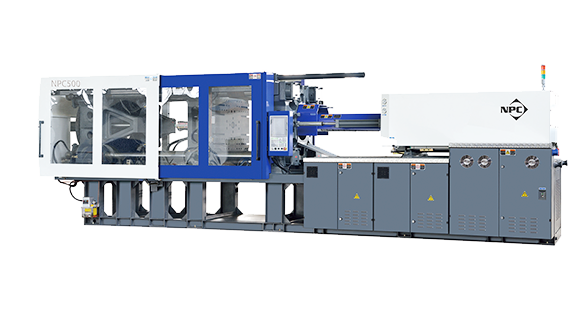
Injection molding is a manufacturing process that injects molten plastic into a closed mold under high pressure to produce solid plastic parts with consistent quality and accuracy. After cooling, the finished part is ejected, and the cycle repeats.
Typical Injection Molding Process:
Plastic Pellets→Plasticizing→Injection→Mold Filling→Cooling→Ejection→Finished Part
Key features of injection molding include high-pressure injection, a closed mold cavity, controlled cooling, and automatic ejection. The process is widely used to manufacture automotive parts, plastic baskets, electronic housings, household products, and medical components, making it ideal for producing solid, high-precision plastic parts in large volumes.
Blow molding is a manufacturing process that uses compressed air to expand heated plastic inside a mold, producing hollow plastic products.
Typical Blow Molding Process:
Plastic Resin→Parison/Preform→Blow Air→Mold Expansion→Cooling→Trimming→Finished Product
The main types are Extrusion Blow Molding(EBM), Injection Blow Molding(IBM), and Stretch Blow Molding(SBM). It is commonly used to manufacture bottles, fuel tanks, jerry cans, and other hollow containers.
Although both processes use thermoplastic materials, they differ significantly in manufacturing method, product design, and typical applications.
|
Feature |
Injection Molding |
Blow Molding |
|
Product Type |
Solid parts |
Hollow parts |
|
Manufacturing Method |
Inject molten plastic |
Inflate a parison or preform |
|
Mold Complexity |
Higher |
Lower |
|
Precision |
Very high |
Medium |
|
Wall Thickness |
Thick or variable |
Thin and uniform |
|
Cycle Time |
Fast |
Fast |
|
Material Waste |
Low |
Moderate |
|
Tooling Cost |
Higher |
Lower |
|
Production Volume |
High |
High |
The biggest difference is that injection molding produces solid plastic components, while blow molding is designed for hollow plastic products.

Although both processes are widely used in plastic manufacturing, they are designed for different product types. Injection molding is best suited for complex, solid parts that require high precision and repeatability. It is also compatible with a wide range of materials, making it ideal for automotive, consumer products, electronics, and industrial components. In contrast, blow molding excels at producing lightweight hollow products with lower tooling costs, high production efficiency, and good material utilization, making it ideal for manufacturing bottles, containers, fuel tanks, and jerry cans.
|
Industry |
Injection Molding |
Blow Molding |
|
Automotive |
Interior parts |
Fuel tanks |
|
Medical |
Instruments, components |
Bottles |
|
Electronics |
Housings |
— |
|
Packaging |
Caps, closures |
Bottles |
|
Consumer Goods |
Toys, baskets |
Containers |
|
Industrial |
Machine parts |
Drums |
The required product structure largely determines which process is more suitable.
Choosing the right molding process depends on your product requirements and production goals. Key factors include product shape, whether the part is solid or hollow, production volume, wall thickness, precision, material selection, tooling budget, and overall production cost. Evaluating these factors early can help improve product quality, optimize manufacturing efficiency, and reduce long-term costs.
There is no universal solution—the right process depends on your product design and manufacturing goals.
Injection molding is the preferred process for manufacturing high-precision plastic parts because it delivers excellent dimensional accuracy and consistent quality. It supports tight tolerances, complex geometries, multi-cavity molds, and stable repeatability, making it ideal for large-scale production. The process is also highly compatible with automated manufacturing, helping improve efficiency while maintaining consistent part quality.
For applications requiring precision, repeatability, and complex part designs, injection molding is often the preferred manufacturing solution.
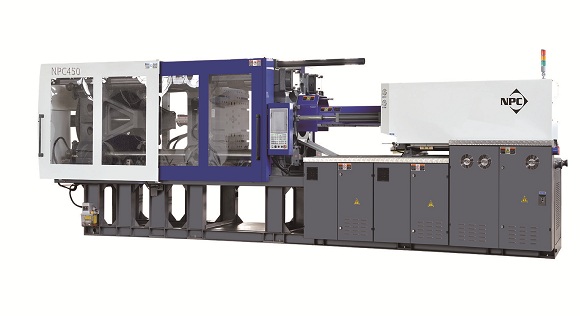
Selecting the right injection molding machine is just as important as choosing the right molding process. Key factors include clamping force, shot size, injection unit performance, servo system, controller, energy efficiency, machine stability, and automation compatibility. It is also important to evaluate the manufacturer's after-sales support, spare parts availability, and industry experience to ensure reliable long-term operation.
A reliable injection molding machine supplier can help improve production efficiency, reduce operating costs, and support sustainable business growth.
Injection molding and blow molding each offer distinct advantages. Injection molding is ideal for producing solid, high-precision parts, while blow molding is better suited for lightweight hollow products. The right choice depends on your product design, production volume, quality requirements, and budget.
For manufacturers seeking reliable plastic injection molding solutions, NPC provides high-performance injection molding machines, customized turnkey solutions, and comprehensive after-sales support. Contact NPC today to find the right injection molding solution for your production needs.
By continuing to use the site you agree to our privacy policy Terms and Conditions.