Cooling is often considered a routine step in injection molding, but it has a much greater impact on production than simply helping a molded part solidify. A well-controlled cooling process can influence dimensional accuracy, surface quality, cycle time, and overall production efficiency.
Because cooling can account for a significant portion of the injection molding cycle, poor temperature control or uneven heat removal can create warping, sink marks, internal stress, and inconsistent part quality. At the same time, inefficient cooling can extend cycles and increase energy and operating costs.
This article explains the importance of cooling in injection molding process, from basic cooling principles to cooling methods, channel design, system components, optimization, and maintenance. It also examines common cooling problems and practical ways to improve molding performance.

Cooling is the stage where molten plastic loses heat inside the mold and becomes stable enough to be ejected. After injection and packing, heat must be transferred from the plastic through the mold and removed by a controlled cooling medium, usually water.
The main goals of injection molding cooling are to:
A mold cooling system typically includes cooling channels, pumps, valves, hoses, temperature controls, and a heat-removal unit. Together, these components help control heat transfer and keep the molding process stable from cycle to cycle.
Cooling influences part quality, production speed, material performance, equipment reliability, and overall manufacturing cost.
Part Quality
Uneven cooling can cause different areas to shrink at different rates, resulting in:
Warping and dimensional changes
Sink marks and internal stress
Inconsistent surface appearance
Cycle Time
Cooling can account for a large share of the injection molding cycle. If a part remains too hot for ejection, the cycle must be extended. Efficient cooling can shorten cycle time and increase output.
Material Performance
Cooling conditions affect how polymers develop their final properties. Excessive or uneven cooling may increase internal stress and affect strength or stability.
Surface Quality
Uniform cooling helps maintain consistent mold temperatures, reducing surface defects, gloss differences, and visible imperfections across the molded part.
Machine and Mold Life
Stable temperatures help prevent excessive heat from affecting the mold, barrel, hydraulic system, and related components. This can reduce wear and maintenance needs.
Production Cost
Long cycles, rejected parts, rework, and excessive energy consumption all increase production costs. Better cooling can improve efficiency while reducing waste and cost per part.
Different molding applications require different cooling methods. The choice depends on the material, part design, mold structure, and required temperature control.
Water Cooling
Water is the most common cooling medium because it transfers heat efficiently and can circulate through mold channels, barrels, or hydraulic oil coolers. It suits most general injection molding applications.
Air Cooling
Air cooling uses fans or compressed air to remove heat. Although less efficient than water, it can be useful for:
Chiller Systems
Chillers provide controlled cooling water at a stable temperature. They are useful when precise temperature control is important, such as in precision or temperature-sensitive molding.
Barrel and Oil Cooling
Barrel cooling helps maintain stable processing temperatures, while hydraulic oil cooling prevents excessive oil temperature changes. Both support consistent machine performance during continuous production.
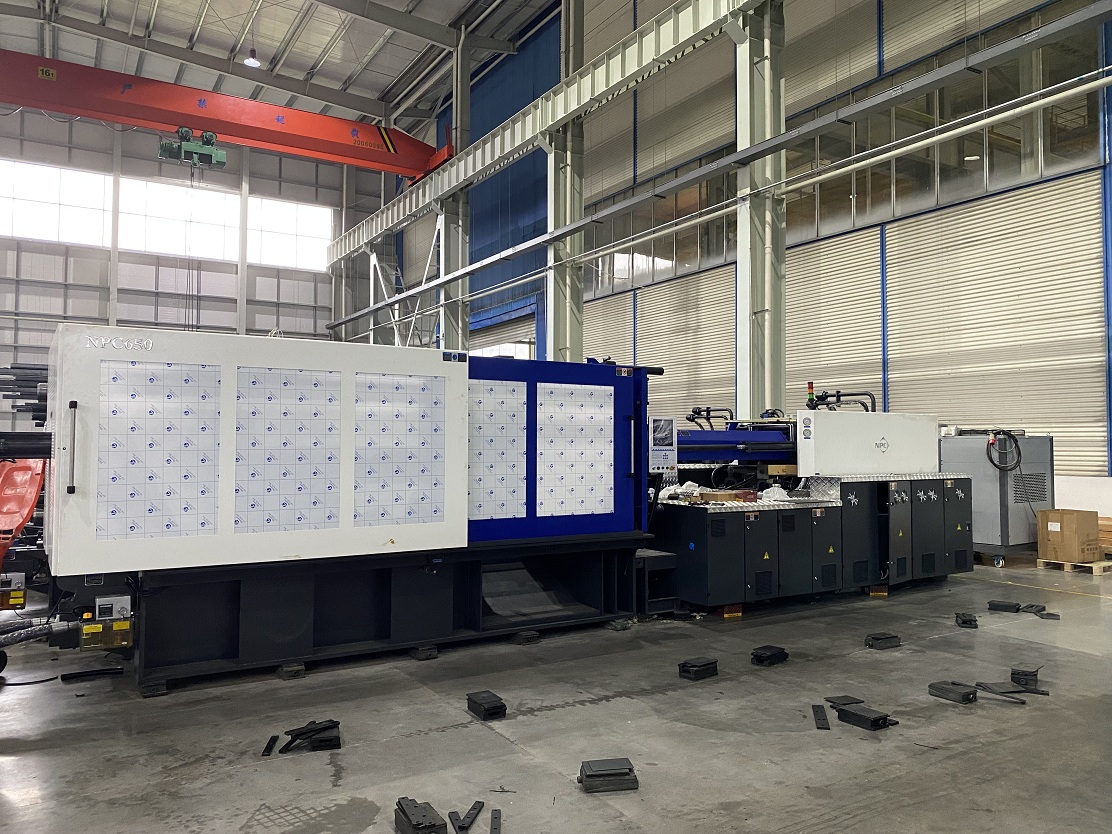
Cooling channel design determines how evenly heat is removed from the mold. The best layout should follow the part geometry, target hot spots, and required cycle time.
|
Main Feature |
Typical Use |
|
|
Straight-Line |
Simple drilled passages |
Simple part shapes |
|
Conformal |
Channels follow part contours |
Complex or uneven geometries |
|
Baffles |
Redirect coolant through narrow areas |
Thin or difficult-to-reach sections |
|
Bubblers |
Circulate coolant inside cores |
Deep or slender cores |
|
Thermal Pins |
Transfer heat from localized areas |
Isolated hot spots |
Channel layout should also consider flow balance, accessibility, and pressure loss. Proper spacing and circulation help maintain a more uniform mold temperature and reduce the risk of warping or localized overheating.
|
Component |
Function |
|
Pump |
Circulates cooling fluid |
|
Heat Exchanger |
Transfers unwanted heat |
|
Chiller |
Provides controlled cooling |
|
Valve |
Regulates fluid flow |
|
Regulator |
Adjusts pressure and flow |
|
Sensor |
Monitors temperature and conditions |
|
Controller |
Maintains target settings |
|
Manifold |
Distributes fluid to circuits |
|
Hose |
Connects cooling circuits |
|
Cooling Channel |
Carries fluid through the mold |
Each component of an injection mold cooling system plays a specific role in conveying, regulating, and controlling the cooling medium. The medium circulates through the circuit, removing heat from the mold before returning for conditioning prior to the start of the next cycle. Stable flow rates and temperatures help ensure consistent heat dissipation, while monitoring and control components enable operators to maintain the required process conditions. Accessible connection points and channel designs also simplify inspection and cleaning.
Effective cooling should remove heat evenly while keeping cycle time and energy use under control.
Cooling circuits should match the part geometry and heat load. Extra cooling may be needed around thick sections or hot spots to reduce temperature differences.
Adequate coolant flow improves heat transfer, while excessive flow can increase pressure and pump energy. Simulation can also help identify hot spots and optimize channel layouts before mold production.
Finally, resin type and wall thickness should be considered because both affect heat transfer and cooling time.
Regular maintenance keeps cooling performance stable and helps prevent unexpected downtime. Small changes in flow, temperature, or pressure can indicate developing problems.
Key maintenance tasks include:
Keeping cooling circuits clean and properly monitored helps maintain consistent heat transfer, stable cycle times, and reliable molding performance.

Cooling problems often appear as changes in part quality, cycle time, or system performance. Identifying the symptom can help narrow down the cause and determine the appropriate corrective action.
|
Problem |
Likely Cause |
Solution |
|
Long cycle |
Low flow or blocked channel |
Clean and balance circuits |
|
Warping |
Uneven cooling |
Improve channel layout |
|
Sink marks |
Hot spots |
Add local cooling |
|
Water leaks |
Worn seals or hoses |
Replace damaged parts |
|
Scale buildup |
Poor water quality |
Clean and treat water |
|
High energy use |
Excessive flow or pressure |
Optimize flow settings |
Cooling is a key part of injection molding, affecting part quality, cycle time, material performance, energy use, and production cost. Effective results depend on balanced cooling channels, stable flow and temperature, proper system maintenance, and cooling conditions suited to the material and part design.
The right injection molding machine can also support more stable production by providing reliable temperature control and performance for specific applications. Since 2009, NPC Machine has provided precision plastic injection molding machines, high-speed series, fruit basket and basket production solutions, and turnkey support. Contact NPC Machine to discuss your machine and production requirements.
By continuing to use the site you agree to our privacy policy Terms and Conditions.