Choosing the right injection molding machine can have a direct impact on production efficiency, product quality, energy consumption, and operating costs. As manufacturers face growing pressure to improve productivity while controlling long-term expenses, the choice between electric and hydraulic drive systems has become an important equipment decision.
Electric and hydraulic injection molding machines each offer distinct advantages. Electric machines are known for precise servo control, lower energy consumption, faster response, and cleaner operation, while hydraulic machines remain attractive for large parts, high clamping forces, and projects with tighter upfront budgets.
This article compares electric and hydraulic injection molding machines and examines five key advantages of electric systems. It covers energy efficiency, precision and repeatability, cycle time, maintenance requirements, and operating cleanliness, while also explaining when hydraulic machines may still be the more practical choice.

The main difference between electric and hydraulic injection molding machines is how their movements are powered and controlled.
A hydraulic injection molding machine uses pumps, valves, cylinders, and hydraulic oil to generate machine movement. It provides strong clamping force and is commonly suited to large parts, thick-wall products, and high-pressure molding. Its lower initial cost can also appeal to budget-conscious projects.
An all electric molding machine uses independent servo motors and ball screws to control its main axes. Without a hydraulic oil system, it can provide precise movement, lower energy consumption, and quieter operation. These characteristics make it suitable for medical, optical, connector, and thin-wall packaging applications.
Understanding these differences provides a useful starting point for evaluating the five key benefits of electric machines.
Energy consumption is one of the clearest differences between electric and hydraulic injection molding machines. For manufacturers running machines for long hours or across multiple shifts, even moderate savings can reduce operating costs over time.
Traditional hydraulic machines often keep the pump running during production, including periods when full power is not required. Electric machines use servo motors that deliver power according to the movement and load required.
This helps reduce unnecessary energy use during:
Depending on the machine and application, electric injection molding machines can use 20-70% less energy than comparable hydraulic models.
For precision plastic parts, consistent movement is just as important as production speed. Electric injection molding machines use servo motors with closed-loop control, allowing injection speed, position, and pressure to be adjusted precisely.
Compared with hydraulic systems, electric drives are less affected by oil temperature, viscosity changes, or valve response. This can support more stable molding conditions and repeatable part dimensions.
Key benefits include:
Positioning accuracy can reach around 0.01 mm in suitable applications. This makes electric machines well suited to medical components, optical parts, connectors, and other products requiring tight dimensional control.

In high-volume production, faster machine movements can directly increase output. Unlike hydraulic systems that rely more on sequential operations, electric injection molding machines use independently driven servo axes. These axes can coordinate multiple movements within a single molding cycle, while rapid acceleration and deceleration help reduce dry-cycle and overall cycle times without compromising precise control.
The benefits are especially useful for:
Depending on the application, electric machines may reduce cycle times by around 10-30%. Shorter cycles allow more parts to be produced within the same operating period, increasing throughput without requiring additional machines.
Maintenance requirements can affect both operating costs and production continuity. Hydraulic machines typically require regular attention to oil, filters, seals, hoses, and cooling systems, creating more potential sources of leakage or wear.
Electric machines eliminate many hydraulic components from the main drive system, reducing routine maintenance needs. This can help lower the risk of unexpected downtime caused by:
Electric machines are not maintenance-free, as servo motors and ball screws may require specialized repairs. However, fewer routine service points can simplify maintenance and support more consistent production availability over time.
A cleaner and quieter production environment is another advantage of electric injection molding machines. Because they do not rely on hydraulic oil for the main drive system, they reduce the risk of oil leaks and related contamination.
This makes electric machines suitable for environments where cleanliness and workplace conditions are important, including:
Electric machines also generally produce less operating noise and heat than traditional hydraulic systems. Lower noise can improve workplace comfort, while reduced energy consumption supports more sustainable production.
The following comparison summarizes the main factors manufacturers should consider when evaluating machine options.
|
Feature |
Electric |
Hydraulic |
|
Energy use |
20-70% lower |
Higher |
|
Precision |
Excellent |
Good |
|
Cycle time |
Faster |
Moderate |
|
Maintenance |
Lower |
Higher |
|
Noise |
60-68 dB |
75-85 dB |
|
Clean operation |
Excellent |
More limited |
|
Upfront cost |
20-40% higher |
Lower |
|
Best suited for |
Precision, medical, thin-wall, high-speed |
Large parts, high clamp force, lower budgets |
The comparison shows that neither technology is ideal for every application. Electric machines generally offer stronger efficiency, precision, and operating performance, while hydraulic machines remain practical where high clamping force, large part sizes, or lower initial investment are priorities.
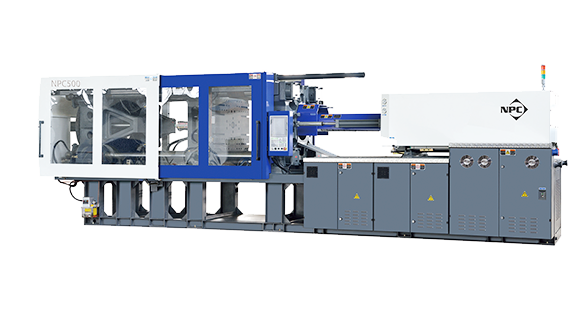
Electric machines offer clear advantages, but hydraulic technology remains practical for demanding applications. Its ability to generate high clamping force makes it especially useful for large machines and heavy-duty molding.
Hydraulic machines can be a strong choice for:
They are also widely available in the used-machine market, which can reduce initial investment. For manufacturers focused on large parts, sustained clamping force, or purchase cost, a hydraulic injection molding machine may still provide the most practical solution.
Electric machines stand out for lower energy consumption, precise and repeatable control, faster cycles, simpler maintenance, and cleaner, quieter operation. These advantages make them particularly suitable for high-volume, precision, thin-wall, medical, and clean production. However, hydraulic machines remain a practical choice for large parts, high clamping forces, and projects where initial investment is a major consideration. The best option depends on the specific requirements of each application.
Since 2009, NPC Machine has provided precision plastic injection molding machines and customized production solutions for global manufacturers. Looking for the right machine for your application? Contact NPC Machine to discuss your requirements and get expert selection support.
By continuing to use the site you agree to our privacy policy Terms and Conditions.