Choosing an injection molding machine based on clamping force alone can lead to costly mismatches. Although tonnage is an important selection factor, it does not fully reflect a machine's injection capacity, mold space, or suitability for a specific product. Buyers need to look beyond the headline specification to understand what each machine can actually handle.
Two machines with the same clamping force may have different tie-bar spacing, platen dimensions, opening strokes, and shot capacities. These differences affect mold compatibility, achievable part sizes, and production efficiency. Understanding injection molding machine basics helps manufacturers evaluate these specifications and compare machines against their actual production needs.
This article compares small, medium, and large injection molding machines by physical dimensions, shot capacity, and typical applications. It also examines how mold design, screw configuration, and material requirements affect usable capacity, helping manufacturers select machines that match their production requirements.

Clamping force keeps the mold closed against injection pressure, but it does not directly indicate machine dimensions or maximum part weight. Check these injection molding machine components and specifications:
Machines with equal clamping force may still accommodate different molds.
Three factors determine whether a machine can handle a production shot:
Rated capacity alone does not guarantee suitability; material properties and processing conditions also matter. Ultimately, machine dimensions determine mold compatibility, while injection and plasticizing capacity determine whether the required shot can be processed reliably.
Start with Part Requirements
Before deciding how to select an injection molding machine, define the part, material, and production target. These determine the required clamping force, injection performance, and cycle time.
Check Mold Fit
|
Check |
What to Verify |
|
Part and material |
Weight, projected area, wall thickness, resin properties |
|
Mold compatibility |
Mold dimensions, tie-bar spacing, platen size, mold thickness, opening and ejector strokes |
|
Production performance |
Clamping force, shot capacity, plasticizing rate, cycle time, stability |
Compare Under Equal Conditions
Evaluate every candidate using the same part, mold, material, and output target. Material flow and heat sensitivity can affect injection pressure and plasticizing needs, so rated specifications alone are insufficient.
A machine is suitable only if the mold fits and the machine can meet the required processing conditions consistently.

Small, medium, and large injection molding machine types have no universal tonnage boundaries. Compare machines by mold fit, shot capacity, and intended application.
|
Size |
Typical Applications |
Key Requirements |
|
Small |
Connectors, small gears, sensor housings, household parts |
Compact mold space, suitable shot weight, stable injection |
|
Medium |
Thin-wall food containers, fruit crates, buckets, appliance parts |
Fast filling for thin walls; sufficient shot and mold space for crates and buckets |
|
Large |
Automotive bumpers, large appliance housings, other large parts |
Higher clamping force, larger mold space, sufficient injection and plasticizing capacity |
Clamping force, tie-bar spacing, and shot weight describe different capabilities. For larger machines, also check mold weight, opening stroke, robot clearance, and auxiliary equipment.
Similar-tonnage machines can serve different purposes because their injection speed, screw configuration, and mold-opening design may vary. Choose based on the actual part, material, mold, and target cycle.
To calculate shot capacity of an injection molding machine, include parts and runners:
Total shot weight = Part weight×Number of cavities + Runner weight
Multi-cavity molds and cold runners increase shot requirements.
Screw diameter and injection-unit configuration affect rated shot capacity. An oversized screw may increase melt residence time with small shots, especially for heat-sensitive materials. Check resin properties and manufacturer recommendations.
Delivering one shot does not guarantee sufficient plasticizing capacity for the target cycle. Thin-wall molding needs fast injection, while larger parts may require more shot capacity and longer cooling.
Actual suitability depends on shot weight, screw configuration, material, and cycle time.
When deciding how to calculate injection molding machine tonnage, follow these steps:
Clamping-force estimates depend on the application. No single empirical factor suits every resin and part. Confirm the calculation with appropriate technical guidance, then verify mold compatibility and shot capacity.
Choose a machine that meets all critical requirements, not simply one with higher tonnage or shot capacity.
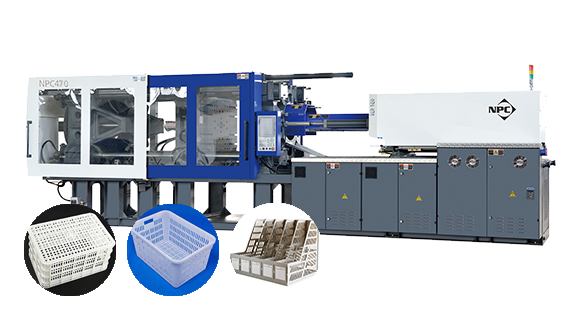
Choosing the right injection molding machine requires balancing clamping force, mold compatibility, shot weight, screw configuration, and plasticizing capacity. Small, medium, and large machines differ in mold space, usable shot capacity, and typical applications. For injection molding machine selection for appliances, buyers should evaluate the actual part, mold, material, and production targets.
Founded in 2009, NPC Machine operates a manufacturing facility spanning over 130,000 square meters and offers high-speed, fruit-crate, basket-production, and other specialized injection molding solutions. To identify a suitable configuration, contact NPC Machine with your part specifications, mold dimensions, and material requirements for further evaluation.
By continuing to use the site you agree to our privacy policy Terms and Conditions.