As plastic products continue to be widely used in industries such as automotive, packaging, electronics, medical devices, and household goods, manufacturers are placing greater attention on product precision and consistency. In plastic injection molding, even small dimensional variations can affect product performance, assembly efficiency, and overall product quality.
For this reason, dimensional inspection has become an important part of the injection molding process. Accurate dimensional control not only helps maintain product quality but also improves production stability and reduces manufacturing costs. At the same time, the performance and consistency of the injection molding machine directly influence the dimensional accuracy of molded parts.
To better understand its importance, dimensional inspection refers to the process of measuring molded plastic parts to confirm that they meet specified dimensions and tolerances. Manufacturers compare finished parts with engineering drawings, CAD models, and product specifications to verify molding accuracy.
This inspection process helps ensure that each molded product maintains consistent shape, size, and structural performance during mass production. It also supports smooth downstream assembly operations by preventing fitting and alignment issues.
Common dimensional inspection methods include manual measuring tools such as calipers and micrometers, as well as advanced systems like coordinate measuring machines (CMM), laser scanning equipment, and automated vision inspection systems.
In injection molding production, dimensional accuracy directly affects the assembly performance of plastic components. If molded parts do not meet tolerance requirements, they may not fit together properly during assembly. This can lead to production delays, increased rejection rates, and additional repair work.
At the same time, dimensional variations may influence sealing performance in products that require precise fitting, such as automotive or electronic components. Incorrect dimensions can reduce the effectiveness of seals and gaskets, affecting the reliability of the final product.
Beyond functionality, dimensional consistency also impacts product appearance. Uneven dimensions may create visible gaps, deformation, or inconsistent surfaces that reduce product quality perception. For consumer products especially, appearance quality is closely connected to customer satisfaction.
In addition, dimensional problems often increase manufacturing costs. Rework, sorting, assembly adjustments, and rejected parts all require additional labor and production time. Stable dimensional control helps manufacturers improve efficiency and reduce unnecessary waste.

The injection molding machine itself plays a critical role in maintaining stable dimensions during production. One important factor is injection pressure stability. Consistent injection pressure helps ensure uniform cavity filling and reduces dimensional fluctuations between production cycles.
Meanwhile, mold temperature control also affects dimensional stability. Uneven or unstable cooling conditions may cause inconsistent shrinkage, resulting in part deformation or dimensional variation after molding.
Back pressure is another important parameter. Proper back pressure improves melt consistency and helps maintain stable shot size during production. More consistent melt density supports better dimensional repeatability across molded products.
In addition, stable clamping force is necessary to maintain proper mold closure during injection. Insufficient clamping force may lead to flash, part deformation, or inconsistent dimensions. A reliable injection molding machine helps maintain stable process control throughout the production cycle.
Several factors can lead to dimensional issues in injection molding production. One common cause is material shrinkage variation. Different plastic materials have different shrinkage rates, and improper cooling control may increase dimensional instability.
At the same time, unstable processing conditions may also create dimensional inconsistencies. Changes in injection speed, holding pressure, melt temperature, or cooling time can affect the final size and shape of molded parts.
Mold design also plays an important role. Poor gate design, insufficient venting, or uneven cooling channel layout may result in uneven material flow and inconsistent part shrinkage.
In addition, machine wear can gradually affect molding precision over time. Worn screws, barrels, hydraulic systems, or inaccurate sensors may reduce process stability and influence dimensional consistency.
To achieve reliable inspection results, manufacturers should first fully understand product specifications and tolerance requirements before beginning the inspection process. Identifying critical dimensions helps prioritize the most important quality control points.
Next, selecting suitable measurement tools is essential. Simple dimensions may be checked using calipers or micrometers, while complex geometries may require advanced CMM equipment or automated scanning systems.
At the same time, inspections should be conducted in a controlled environment. Stable temperature, humidity, lighting, and cleanliness help reduce external influences that may affect measurement accuracy.
In practical production, manufacturers often inspect critical dimensions first because these dimensions directly affect assembly performance and product functionality. This approach improves inspection efficiency and focuses quality control efforts on the most important areas.
With the development of manufacturing technology, many companies are adopting automated inspection systems to improve efficiency and precision. Automated vision inspection systems can quickly measure multiple dimensions and detect surface defects during production.
Laser scanning technology also provides highly accurate dimensional analysis for complex plastic parts. These systems help manufacturers improve inspection speed while reducing manual measurement errors.
At the same time, cavity pressure monitoring systems are becoming more widely used in injection molding production. Stable cavity pressure is closely related to consistent part dimensions and molding quality. Monitoring cavity pressure helps operators identify process variation earlier and maintain stable production conditions.
In addition, Statistical Process Control (SPC) systems allow manufacturers to monitor production data in real time. By analyzing process trends, companies can detect dimensional variation before serious defects occur.
Dimensional inspection is not only about identifying defective parts. More importantly, inspection data helps manufacturers continuously improve the molding process. When dimensional deviations appear, root cause analysis helps determine whether the issue comes from material conditions, machine settings, mold design, or equipment wear.
Through regular process review and optimization, manufacturers can improve molding stability, reduce quality risks, and maintain long-term production consistency. Continuous improvement also helps injection molding companies strengthen their competitiveness in demanding global markets.
Overall, dimensional inspection plays a critical role in injection molding machine production. Accurate dimensional control helps ensure proper assembly, stable product performance, consistent appearance quality, and lower manufacturing costs. At the same time, stable injection molding machine performance is essential for maintaining reliable molding precision.
By combining advanced inspection methods, stable process control, and professional technical management, manufacturers can achieve better production consistency and improve overall product quality.
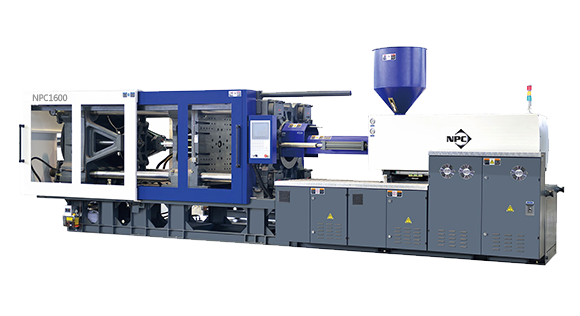
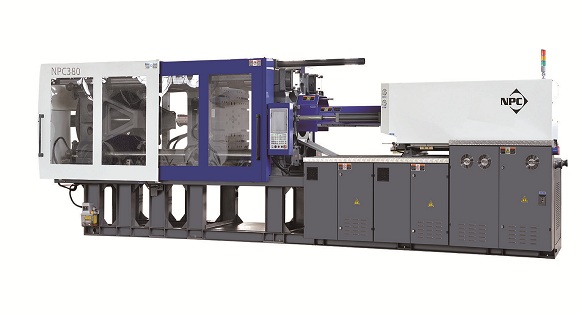
As a professional manufacturer of plastic injection molding machines, NPC is committed to providing reliable machine solutions for customers worldwide. With strong experience in injection molding technology, NPC offers high-performance injection molding machines designed to support stable processing, precise molding control, and efficient production across various plastic manufacturing applications.
By continuing to use the site you agree to our privacy policy Terms and Conditions.