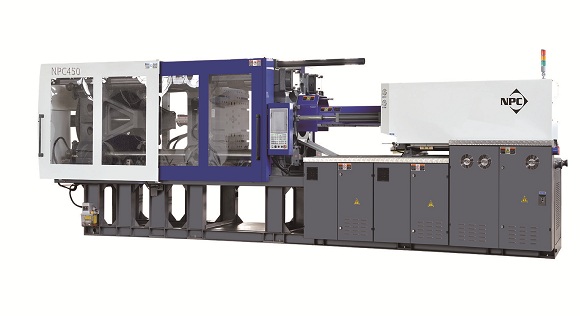
As plastic packaging and engineering plastic products continue to expand across global industries, PET materials are widely used in injection molding production. PET, also known as Polyethylene Terephthalate, is commonly applied in bottle preforms, transparent plastic products, electrical components, and structural plastic parts because of its good mechanical strength, surface gloss, and dimensional stability.
Compared with some standard plastic materials, PET injection molding has stricter requirements for temperature control, material drying, and processing stability. For this reason, selecting a suitable PET injection molding machine and optimizing the molding process are important for maintaining product quality and production efficiency.
To better understand PET injection molding production, it is important to first recognize the characteristics of PET material itself. PET has good melt flow performance during processing, and its melt viscosity is influenced more by pressure than by temperature. This means injection pressure control plays a very important role during molding.
At the same time, PET materials have relatively high moisture absorption under high-temperature conditions. If moisture is not properly controlled before production, hydrolysis may occur during melting, which can affect product appearance and mechanical performance.
In addition, PET materials provide good transparency and surface gloss under proper molding conditions. Some applications also use glass fiber reinforced PET materials to improve structural strength and rigidity for engineering products.
Because PET has a narrow processing temperature range, maintaining stable temperature control throughout the injection molding process is especially important.
In many industries, PET injection molding is mainly used for producing PET bottle preforms. These preforms are later processed through blow molding to manufacture beverage bottles and packaging containers.
At the same time, PET injection molding is also used in industrial and engineering applications. Structural components, electrical housings, and functional plastic parts often use PET materials because of their dimensional stability and mechanical performance.
For transparent plastic products, PET offers good optical appearance and surface quality when proper mold temperature and processing conditions are maintained. This makes PET suitable for products requiring both strength and visual quality.
Before PET injection molding begins, material drying is one of the most important preparation steps. Since PET absorbs moisture easily, drying helps prevent material degradation during melting. Proper drying conditions improve product consistency and reduce molding defects.
Next, during the plasticizing stage, the screw inside the injection molding machine rotates to melt and transport the material forward. Stable heating and consistent screw performance help maintain uniform melt quality throughout production.
During the injection stage, molten PET material is injected into the mold cavity under controlled pressure. Stable injection pressure and injection speed are necessary to ensure complete cavity filling and maintain dimensional consistency.
After injection, cooling and solidification begin inside the mold. Cooling conditions directly affect PET crystallization behavior, product transparency, and dimensional stability. For this reason, mold temperature control is critical in PET injection molding production.

Compared with some other plastic processing applications, PET injection molding machines require stable plasticizing capability and precise temperature control.
Generally, screw-type injection molding machines are preferred for PET processing because they provide better melt preparation and more stable material mixing performance. Screw design also plays an important role in molding quality.
In many cases, hardened and wear-resistant screws are recommended, especially when processing glass fiber reinforced PET materials. Proper screw compression ratio and screw length help improve plasticizing consistency while reducing excessive material degradation.
At the same time, nozzle design is another important consideration. Short nozzles with proper heating control help reduce material blockage and maintain stable melt flow. Excessive nozzle temperature, however, may lead to material leakage or drooling during production.
Because reinforced PET materials may increase equipment wear, barrels and related machine components often require wear-resistant materials to support long-term production stability.
During PET injection molding production, barrel temperature control directly affects melt quality and final product performance. If the temperature is too low, poor plasticizing may occur, leading to incomplete filling or surface defects. If the temperature is too high, the material may degrade, causing discoloration and reduced mechanical strength.
For many PET applications, barrel temperatures are commonly controlled within an appropriate processing range to maintain stable melt conditions. Nozzle temperature is usually slightly lower than barrel temperature to reduce leakage risks.
Meanwhile, mold temperature also influences product quality. Mold temperature affects cooling speed and PET crystallization behavior, which in turn impacts transparency, shrinkage, and dimensional stability.
Injection pressure is another critical factor. Since PET melt flow behavior is strongly affected by pressure, stable injection pressure helps achieve consistent cavity filling and product quality. Proper pressure settings depend on part geometry, gate design, material type, and machine configuration.
Although PET offers many processing advantages, several production challenges still require careful control.
One common issue is moisture-related defects caused by insufficient drying. Moisture inside the material may lead to hydrolysis during melting, affecting product strength and surface quality.
Another challenge is material degradation caused by excessive heating or overly long residence time inside the barrel. Stable processing temperature and proper machine setup help reduce this risk.
In addition, uneven cooling may cause warpage or dimensional variation. Maintaining stable mold temperature and balanced cooling conditions is important for dimensional consistency.
Nozzle blockage and material leakage may also occur if nozzle heating conditions are not properly controlled. For this reason, stable nozzle temperature management is necessary during continuous PET injection molding production.
To improve PET molding performance, manufacturers should focus on maintaining stable process conditions throughout production.
First, multi-zone heating systems help maintain consistent barrel temperature and stable melt quality. Proper screw speed adjustment also improves plasticizing efficiency while reducing unnecessary material shear.
Meanwhile, optimized mold cooling systems help improve cycle efficiency and reduce dimensional variation. Balanced cooling design supports more stable crystallization and product quality.
In addition, selecting the correct PET injection molding machine configuration helps improve overall production stability. Proper machine capacity, screw design, and control systems all contribute to efficient PET processing.
As PET materials continue to be widely used in packaging and industrial manufacturing, stable PET injection molding production becomes increasingly important. Because PET processing is sensitive to moisture, temperature, and pressure conditions, manufacturers must carefully control every stage of the molding process.
By combining proper material handling, stable processing parameters, and reliable injection molding machine performance, companies can improve product quality, production efficiency, and long-term manufacturing stability.
NPC is committed to providing professional plastic injection molding machine solutions for global customers. With extensive experience in injection molding technology, NPC offers reliable PET injection molding machines designed for stable plasticizing performance, accurate temperature control, efficient production, and long-term operational reliability across various PET molding applications.
By continuing to use the site you agree to our privacy policy Terms and Conditions.