An injection molding machine converts raw plastic granules into finished parts through mechanical and thermal operations. Each component performs a defined function within clamp, inject, and control subsystems that deliver dimensional accuracy and production repeatability.
The injection unit melts, homogenizes, and pressurizes plastic material before forcing it into the mold cavity. This subsystem contains the hopper, barrel, screw, heater bands, and nozzle, each contributing to material preparation and delivery.

The hopper receives raw granules from external supply and feeds them into the barrel throat by gravity. Capacity ranges from 25 to 100 kg depending on machine size, sustaining continuous production without manual refilling.
Hopper dryers remove moisture from hygroscopic materials. PET, nylon, and polycarbonate require moisture below 0.02 percent to prevent void formation and surface defects.
The barrel provides cylindrical housing where the screw rotates and reciprocates. L/D ratios range from 20:1 to 24:1, determining melt homogeneity and pressure capacity. Hardened inner surfaces resist wear from fiber-filled resins.
The screw performs three functions along its length. The feed zone collects granules. The transition zone compresses and melts material through decreasing channel depth. The metering zone homogenizes melt and delivers consistent volume per shot.
Heater bands mount around the barrel in 3 to 6 independent zones. Each zone maintains setpoint within 1 to 2°C, creating a thermal profile from feed to nozzle. Thermocouple feedback adjusts power output in real time.
Nozzle heater bands prevent premature solidification at the mold interface. Nozzle temperature deviation beyond 5°C produces short shots and dimensional variation in thin-wall parts.
The clamp unit holds the mold closed against injection pressure and opens it for part ejection. Toggle and hydraulic clamp designs dominate the market, each with distinct speed, force, and maintenance characteristics.

Toggle clamp systems use mechanical linkage amplification from a small hydraulic cylinder stroke. Five-point toggles achieve 1:20 to 1:30 force multiplication, producing 50 to 400 tons in standard frames.
Toggle clamps deliver fast 1 to 3 second cycles for packaging applications. The linkage self-locks at full clamp, maintaining closure without continuous hydraulic pressure, reducing energy during the hold phase.
Hydraulic clamp systems use direct-acting cylinders. Cylinder diameter and pressure determine tonnage without amplification. Hydraulic clamps range from 100 to 4,000 tons for large automotive and appliance molds.
Hydraulic clamps provide adjustable force and opening stroke. This accommodates multi-cavity molds with varying projected area and deep-draw molds requiring extended opening distances. Force remains constant through injection and hold phases.
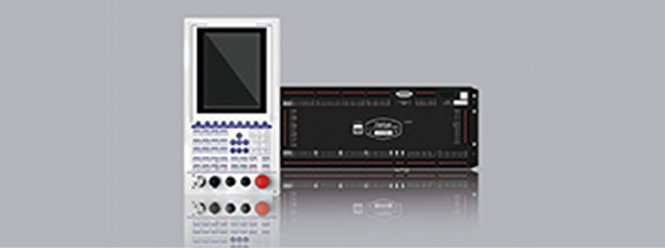
PLC controller executes sequence logic from mold close through ejection. Parameters include injection speed profile, hold pressure stages, cooling timer, and screw position limits.
Pressure transducers monitor injection and hold pressure at 0.1 MPa resolution. Data feeds closed-loop algorithms that adjust servo valve output to maintain setpoint profiles.
Temperature controllers operate barrel zones independently with PID algorithms. Multi-zone control prevents thermal inconsistency that causes warpage and dimensional scatter.
Position encoders track screw displacement and mold movement at 0.1 mm accuracy. Screw position determines shot volume consistency, mold position controls ejection timing and safety interlocks.
|
Part Category |
Component |
Function |
Typical Specification |
|---|---|---|---|
|
Injection Unit |
Hopper |
Material feed and drying |
25 to 100 kg capacity |
|
Injection Unit |
Barrel |
Melt housing and pressure vessel |
20:1 to 24:1 L/D ratio |
|
Injection Unit |
Screw |
Melt, compress, meter |
3-zone design, 30 to 120 mm diameter |
|
Injection Unit |
Heater bands |
Zone temperature control |
3 to 6 zones, 1 to 2°C tolerance |
|
Injection Unit |
Nozzle |
Melt delivery to mold |
Adjustable tip, 5°C control tolerance |
|
Clamp Unit |
Toggle linkage |
Force amplification, fast cycle |
50 to 400 ton, 1 to 3 sec cycle |
|
Clamp Unit |
Hydraulic cylinder |
Direct clamp force |
100 to 4,000 ton, adjustable stroke |
|
Clamp Unit |
Ejector plate |
Part removal from mold |
Pneumatic or hydraulic actuation |
|
Control System |
PLC |
Sequence logic and parameters |
Multi-stage injection profiles |
|
Control System |
Pressure transducers |
Pressure monitoring |
0.1 MPa resolution |
Inconsistent shot weight results from screw position encoder drift, barrel zone instability, or back pressure fluctuation. Calibrate screw position zero-point and verify each heater zone maintains setpoint within 2°C to restore volume repeatability.
Inspection intervals depend on material abrasiveness. General-purpose resins allow 12-month intervals. Fiber-filled resins require 6-month cycles. Measure inner barrel diameter and screw flight clearance to determine wear rates.
General-purpose screws with moderate compression process PE, PP, and PS effectively. PET, nylon, and PC require dedicated profiles with higher compression and mixing sections. Mismatched screws produce poor melt homogeneity.
Modern injection molding machines integrate door switches, mold height sensors, and override keys. The PLC prevents clamp actuation when doors are open and requires dual-key authorization for manual adjustment. These comply with ISO 20430.
Nozzle tip geometry determines melt flow transition. Open tips produce cold slugs at startup. Shut-off nozzles prevent drool between shots. Alignment within 0.05 mm prevents gate flash and dimensional variation.
Injection molding machine operation requires understanding the functional relationship between injection unit components that prepare and deliver melt, clamp unit components that secure and release the mold, and control system components that execute precision parameter profiles.
NPC Machinery manufactures precision injection molding machines with professional R&D and integrated after-sales support. Request a Rapid Sourcing Quote from NPC Machinery for your production specifications, or contact the NPC Machinery engineering team for free custom design support matching your material and part geometry requirements.
By continuing to use the site you agree to our privacy policy Terms and Conditions.